

AC Buying Guide
Simple, honest advice to help you choose the right air conditioner — and keep it running well.
How many tons does your room need?
Buying an AC that’s too small means it runs all day and never quite cools. Too big, and you pay extra for power you don’t need. Pop in your room size and we’ll give you a quick estimate.
- Based on roughly 1 ton per 120 sq ft, adjusted for sun, people and ceiling height
- Free site visit for an exact heat-load calculation
Room size vs AC tonnage
A handy starting point for rooms with a standard ~10 ft ceiling. Sunny, top-floor or crowded rooms may need the next size up.
What those stars on the label mean
Every AC sold in India carries a BEE (Bureau of Energy Efficiency) star label. It shows the star rating, the estimated yearly electricity use in kWh, the ISEER value and the year the label is valid till.
ISEER checks how efficiently the AC cools across a wide band of outdoor temperatures — just like a real Indian summer. Higher ISEER means more stars and a smaller bill. A 5-star AC typically uses about a quarter less electricity than a 1-star AC of the same size.
One more thing: BEE tightens these standards from time to time, so check the validity year on the label when you compare models.
Pick the right system for the space
Split AC
Best for individual rooms — bedrooms, cabins, small shops. Quiet indoor unit, easy to service.
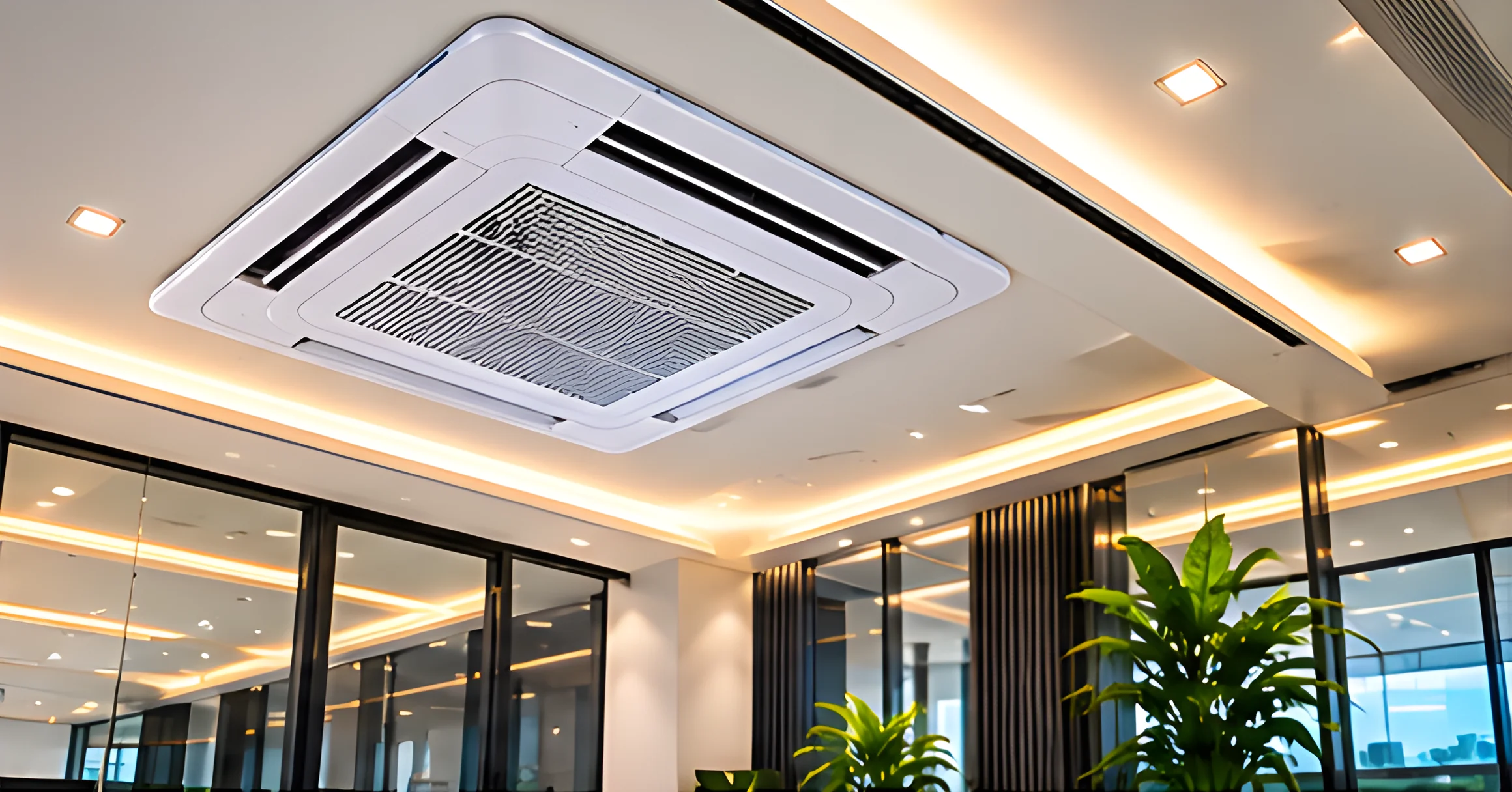
Cassette AC
Sits flush in the ceiling and throws air in all directions — great for open offices, showrooms and restaurants. 360° round cassettes spread air evenly without a cold draught.

Ductable AC
Hidden above the false ceiling with only grills showing — ideal for banquet halls, showrooms and large living areas.
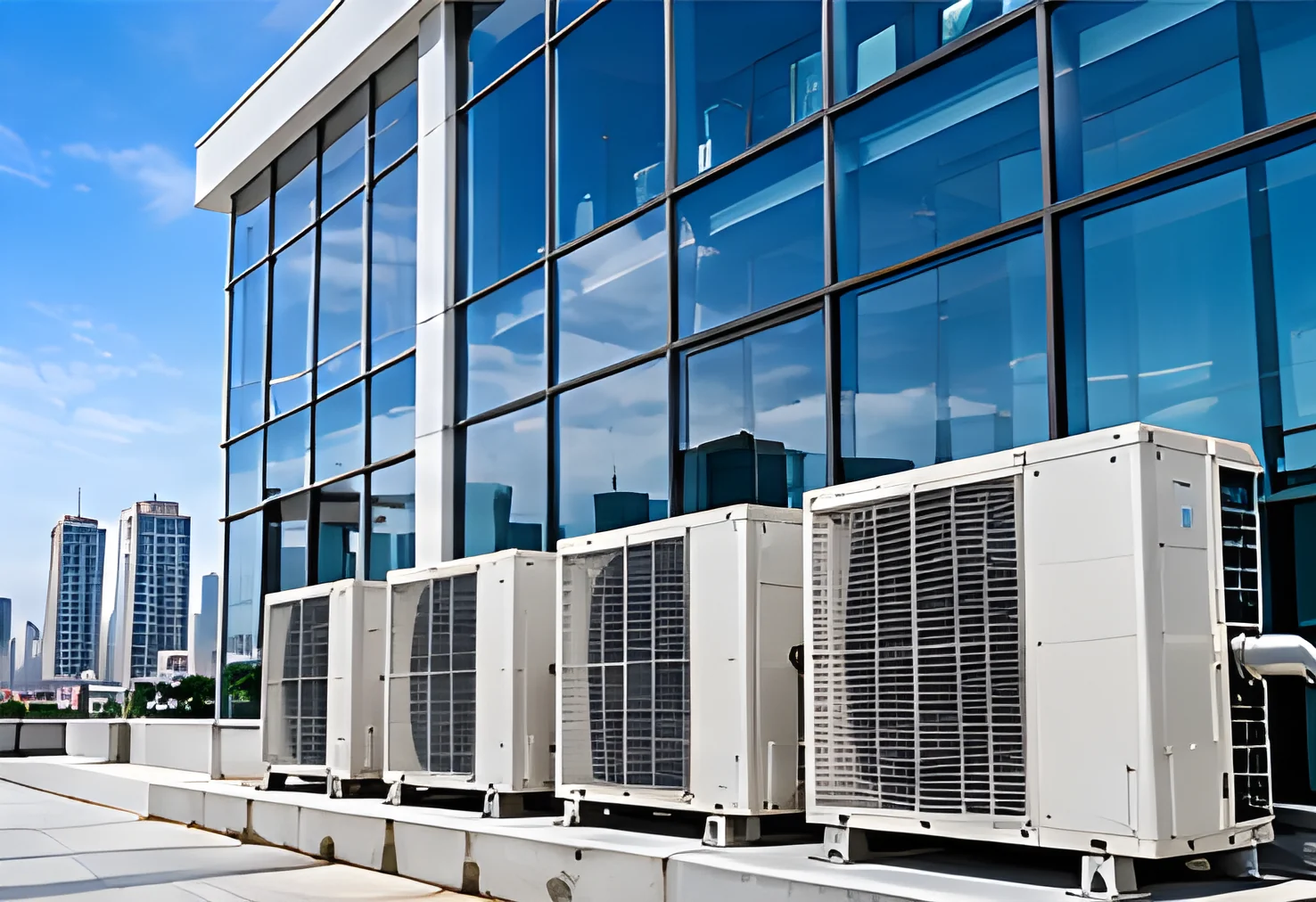
VRF / VRV System
One outdoor system running many indoor units, each zone controlled separately. Research by Oak Ridge National Laboratory found VRF used roughly 15–42% less HVAC energy than conventional VAV systems.
Small habits, big savings
Set it to 24°C
Every degree lower makes the compressor work harder. 24–26°C with a fan is comfortable for most people and much kinder to your bill.
Clean filters often
Dusty filters choke airflow. In peak summer, rinse washable filters every 2–3 weeks.
Service before summer
A pre-season service — coil cleaning, gas check, electrical check — prevents most mid-summer breakdowns.
Give the outdoor unit air
Keep the outdoor unit in shade with open space around it. A cramped, sun-baked unit loses efficiency.
Seal the room
Close doors and windows, and use curtains on sunny glass. Cool air escaping is money escaping.
Watch the warning signs
Ice on pipes, water dripping indoors, or weak cooling usually means low gas or a blockage — call for service early.
